Chemistry (Grade 12 General Sciences, Lebanon) · Chapter 7 · Direct application of the course
Identification of an isomeric carboxylic acid and ester
Carboxylic acids and derivatives: the ester function · level 1 (application)
Statement
A saturated non-cyclic oxygen-containing organic compound has a molecular molar mass and contains two oxygen atoms per molecule.
- Show that the molecular formula of is and state the two main chemical functions (carboxylic acid or ester) compatible with this molecular formula.
- An aqueous solution of an isomer with formula turns bromothymol blue yellow and has a branched carbon chain. Identify (condensed structural formula and IUPAC name).
- Another isomer with formula gives off a fruity smell. Its hydrolysis gives a carboxylic acid and an alcohol , whose mild oxidation by an acidified potassium dichromate solution in deficit gives a compound that gives a yellow precipitate with 2,4-DNPH and a silver mirror with Tollens' reagent. Given that the molecule of contains only one carbon atom, identify , , and .
Data: , , .
Solution
- A carboxylic acid or an ester with a saturated non-cyclic chain has the general molecular formula , with molar mass . We solve:
The molecular formula of is indeed , corresponding either to a carboxylic acid or to an ester.
- The isomer gives an acidic solution (BTB yellow): it is therefore a carboxylic acid with formula . Since its chain is branched, the group is the isopropyl group :
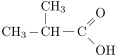
is 2-methylpropanoic acid.
- The isomer , which undergoes hydrolysis into a carboxylic acid and an alcohol , is an ester.
- The carboxylic acid has only one carbon atom: is methanoic acid .
- By conservation of the carbon atoms (), the alcohol has the molecular formula . Its mild oxidation gives , which reacts positively with 2,4-DNPH (carbonyl compound) and with Tollens' reagent (aldehyde). is therefore propanal , and the alcohol is necessarily a primary alcohol: propan-1-ol .
- The ester is consequently propyl methanoate, with condensed structural formula .
Similar exercises
- Multi-step synthesis of the drug ibuprofen and drug esterification (Bac synthesis problem) solved
- Titration of a carboxylic acid and synthesis of its derivatives solved
- Kinetic and thermodynamic study of an equimolar esterification solved
- Shifting the esterification equilibrium with an excess of one reactant solved
- Synthesis of aspirin and saponification of a triglyceride solved
The course of the chapter · All the exercises of the chapter