Chemistry (Grade 11 Humanities, Lebanon) · Chapter 6 · Tutorial exercise
Three entry doors
Pesticides: classification and toxicity · A. Knowing pesticides · level 2
Statement
The diagram below represents a person using a pesticide. Arrows A, B and C show three routes by which the product can enter their body: A toward the nose, B toward the mouth, C toward the hand.
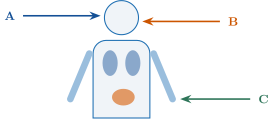
1) Name route of entry A.
2) Name route of entry B.
3) Name route of entry C.
4) Which equipment closes route A? Which equipment closes route C?
5) Name an action, during the treatment, that opens route B.
6) After a morning of spraying without protection, the person has a headache and nausea. Is this acute toxicity or chronic toxicity? Justify.
7) What effects does this person risk if they work like this for twenty years? What is this toxicity called?
Solution
1) A is breathing: the droplets, the vapors or the dust of the product are breathed in.
2) B is ingestion: the product is swallowed.
3) C is the skin: the product settles on the skin and passes through it.
4) A mask closes route A. Gloves (and covering clothing) close route C.
5) Eating, drinking or smoking with hands soiled by the product.
6) It is acute toxicity: the dose received in one morning is high, and the effects appear within a few hours.
7) Diseases that appear late: diseases of the nervous system, some cancers, reduced fertility. This is chronic toxicity, that of small doses repeated over years.
Key takeaway: a pesticide enters through the skin, through breathing or through ingestion; gloves, a mask and cleanliness close these three doors.
Similar exercises
- An orchard's treatment log solved
- A laboratory test solved
- Comparing, classifying, calculating solved
- Four pictograms solved
- The mistakes of a morning of treatment solved
The course of the chapter · All the exercises of the chapter